I’m tired of seeing those $50 “aesthetic” planners and complex digital ecosystems being sold as the holy grail for productivity for ADHD. Seriously, if you’ve ever bought a color-coded system only to have it end up buried under a pile of mail or forgotten in a drawer three days later, you know the truth: most of these tools are just expensive distractions. They aren’t designed for how our brains actually function; they’re designed for people who already have their lives together. I spent years trying to force myself into those rigid, “perfect” frameworks, only to realize I was just building more clutter in a life that was already feeling too loud.
I’m not here to sell you a new hobby or a complicated app that requires a PhD to maintain. My goal is to help you strip away the noise and build small, repeatable systems that actually stick. I’m going to share the low-friction, high-impact methods I use to manage my own chaos—the kind of stuff that works even when your focus is shot. We’re going to focus on functional simplicity so you can stop managing your symptoms and start actually getting things done.
Table of Contents
Taming Executive Dysfunction Strategies Without the Burnout

The biggest mistake I see people making is trying to force a neurotypical schedule onto a brain that simply doesn’t work that way. When you’re staring at a mounting pile of laundry or a complex project report and feel physically paralyzed, that isn’t laziness—it’s executive dysfunction. Instead of white-knuckling your way through the paralysis, I’ve found that neurodivergent workflow optimization requires working with your brain’s natural rhythms rather than against them. If a task feels like a mountain, stop trying to climb it all at once. Break it down until the first step is so small it feels almost stupid to ignore.
One of the most effective executive dysfunction strategies I’ve integrated into my own life is the body doubling technique. Sometimes, just having another person in the room—even if they are just reading a book or working on their own thing—creates enough external structure to keep me anchored to the task at hand. It provides a subtle social pressure that cuts through the fog. It’s not about being watched; it’s about having a passive stabilizer to keep your focus from drifting into the void.
Neurodivergent Workflow Optimization for a Simpler Life

If you’ve ever spent three hours researching the perfect mechanical keyboard switches instead of finishing that report, you already know how dopamine seeking behaviors can hijack your momentum. For me, the trick isn’t to fight that urge with sheer willpower—it’s about building a system that works around it. I’ve learned that trying to force a standard “9-to-5” linear workflow is a recipe for disaster. Instead, I lean into neurodivergent workflow optimization by breaking my day into high-stimulation sprints and low-stakes maintenance periods.
One of the most effective tools in my kit is the body doubling technique. Sometimes, I just need another human being in the room—even if they’re just sitting there on their own laptop—to act as an anchor for my focus. It stops the mental drift before it starts. Pair that with some simple time blindness solutions, like using visual timers rather than digital clocks, and you stop guessing where the hour went. We aren’t trying to fix our brains; we’re just recalibrating the tools we use to navigate them.
Five Low-Friction Systems to Stop the Spiral
- Stop relying on your memory; it’s a faulty hard drive. If a task takes less than two minutes, do it immediately. If it takes longer, it goes into a single, centralized capture tool—whether that’s a physical notebook or a simple app. If it isn’t written down, it doesn’t exist.
- Use “Body Doubling” to bypass the paralysis. If you can’t get started on a tedious task like laundry or admin work, sit in a coffee shop or hop on a video call with a friend where you both work in silence. Having another presence in the room acts as a natural stabilizer for your focus.
- Build “Visual Cues” instead of mental lists. Out of sight is out of mind for us. If you need to remember to take your vitamins or pack your bag, put them directly in your path—on top of your shoes or next to your keys. Don’t fight your environment; use it to nudge you.
- Implement “Micro-Sprints” to defeat task paralysis. When a project feels like an insurmountable mountain, don’t aim for the summit. Set a timer for just ten minutes and tell yourself you can stop when it rings. Usually, the hardest part is just overcoming the initial friction of starting.
- Design an “Emergency Reset” routine. When the chaos hits and you feel the overwhelm rising, stop trying to power through. Clear your physical workspace, grab a glass of water, and do one single, mindless task. You need to clear the mental cache before you can reboot your productivity.
The Bottom Line: Systems Over Willpower
Stop trying to “discipline” your way out of ADHD; instead, build external systems—like visual cues and automated reminders—that do the heavy lifting for you.
Forget the idea of a perfect, aesthetic planner; if a system is too complex to maintain when you’re overwhelmed, it’s a broken tool that needs to be stripped down.
Prioritize momentum over perfection by breaking tasks into the smallest possible mechanical steps to bypass the paralysis of executive dysfunction.
## Systems Over Willpower
“Stop trying to out-discipline your brain with rigid planners that feel like cages; instead, build small, friction-less systems that work with your natural rhythm rather than against it.”
Liam Anders Chen
Final Thoughts on Building Your System
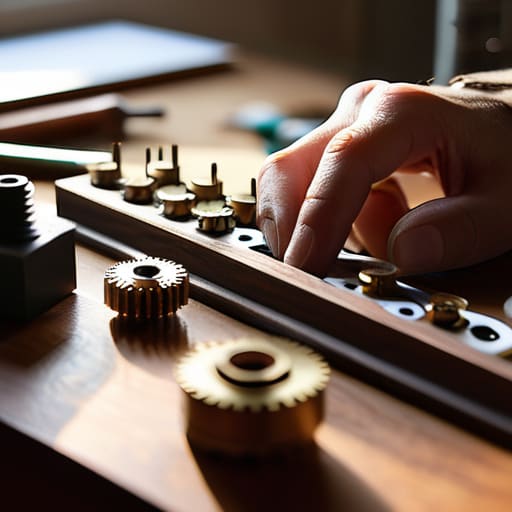
Look, we’ve covered a lot of ground here, from managing the heavy weight of executive dysfunction to building a workflow that actually works with your brain instead of against it. The goal wasn’t to hand you a massive, intimidating manual to memorize; it was to give you a few reliable tools to keep in your kit. Whether it’s simplifying your environment to reduce sensory noise or using micro-systems to bypass that paralyzing “where do I even start?” feeling, remember that these aren’t meant to be perfect. They are meant to be functional. If a system breaks or you fall off the wagon for a week, don’t scrap the whole project. Just grab your screwdriver, tweak the mechanism, and get back to it.
At the end of the day, productivity isn’t about turning yourself into a high-output machine or checking off a hundred meaningless boxes. It’s about reclaiming your mental bandwidth so you have the energy left over for the things that actually matter—the hobbies, the people, and the quiet moments. Stop punishing yourself for not being able to follow a neurotypical blueprint that was never designed for you. Build your own path, keep it minimalist, and focus on what works. You aren’t broken; you just need a better operating system. Now, go live your life.
Frequently Asked Questions
How do I keep these systems going when the initial "new idea" dopamine hit wears off?
That’s the trap. We all fall for the “new system” high, only to let it gather dust when the novelty fades. To survive the slump, you have to stop relying on motivation and start relying on friction. Make your systems so stupidly simple that they require zero willpower to execute. If a process feels like a chore, it’s too complex. Strip it back until it’s almost invisible. Build for your worst days, not your best.
I struggle with starting tasks at all—are there any low-friction ways to bypass that initial paralysis?
The “wall of awful” is real, and trying to power through it with sheer willpower is a losing battle. Instead, lower the barrier to entry. Use the “Two-Minute Rule”: tell yourself you’ll only work for 120 seconds. Usually, the friction isn’t the task; it’s the transition. Once you’ve unscrewed one bolt or typed one sentence, the momentum takes over. Strip the task down to its smallest, most ridiculous component and just start there.
Won't adding more "systems" just become another thing for me to manage and eventually fail at?
I hear you. That’s the trap: building a “system” that’s actually just a second job. If your setup requires a manual, it’s broken. I don’t build complex architectures; I build friction reducers. A good system shouldn’t be something you manage; it should be something that runs in the background, like a well-oiled mechanical keyboard. If it feels like work, strip it down. Aim for simplicity, not sophistication. If it’s not effortless, it’s not working.