I remember sitting at my kitchen table last Tuesday, surrounded by three half-empty coffee mugs and a pile of unopened mail, staring at a blinking cursor that felt like it was mocking me. My “office” was a corner of the dining room, but my brain felt like it was scattered across every room in the house. We’ve been sold this lie that productivity working from home requires a dedicated, high-tech sanctuary or a complex suite of expensive digital planners. Honestly? Most of those “optimization hacks” you see online are just more noise adding to the chaos. You don’t need a $500 ergonomic setup to get things done; you need to stop the mental bleed caused by a workspace that has no boundaries.
I’m not here to sell you on a lifestyle overhaul or some complicated system that takes more time to manage than the actual work. My goal is to give you the stripped-back, functional tactics I use to keep my own head above water. I’ll show you how to build small, repeatable systems that actually work in the real world—not in a perfect, curated studio. We’re going to cut through the fluff and focus on the essential adjustments that will help you reclaim your focus and, more importantly, your evening.
Table of Contents
The Minimalist Guide to an Ergonomic Home Office Setup
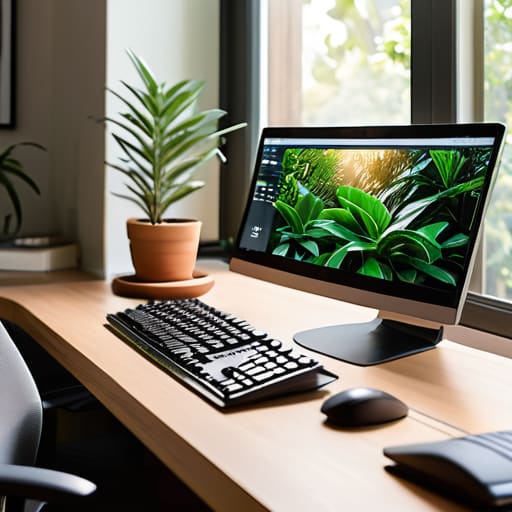
If your setup is a mess of tangled cables and a chair that feels like a wooden bench, you’ve already lost the battle before you even open your laptop. I spent years thinking a decent desk was enough, but I was wrong. A true ergonomic home office setup isn’t about buying the most expensive gear; it’s about alignment. Your monitor should be at eye level so you aren’t hunching like a gargoyle, and your feet need to hit the floor flat. When your body isn’t constantly sending pain signals to your brain, you can actually focus on the task at hand instead of your aching lower back.
Beyond the physical, you need to curate your environment to support deep work strategies for remote workers. This means clearing the visual clutter. I keep my desk limited to the essentials: my laptop, a notebook, and my precision screwdriver if I’m doing some quick maintenance. If your workspace is cluttered, your mind will be too. By stripping away the unnecessary, you create a dedicated zone that signals to your brain: “It’s time to execute.”
Minimizing Home Distractions to Protect Your Focus
The biggest threat to your focus isn’t a lack of willpower; it’s an environment designed to pull you away. I used to think I could just power through the sound of the dishwasher or the lure of a pile of laundry, but that’s a losing battle. To truly master minimizing home distractions, you have to treat your workspace like a sanctuary. If you can’t close a door to a dedicated room, use visual cues—like a specific lamp or even a pair of noise-canceling headphones—to signal to your brain (and your family) that you are officially “at work.”
Beyond the physical clutter, we have to address the digital noise. It is incredibly easy to let a Slack notification or a quick scroll through news sites derail a productive streak. I’ve found that implementing specific deep work strategies for remote workers, such as using website blockers or putting my phone in a different room entirely, is the only way to stay in the zone. You aren’t just managing your time; you are protecting your mental energy so you don’t end the day feeling completely drained.
Five Systems to Stop the Daily Drift
- Build a “Shutdown Ritual” to separate work from life. When I finish my last task, I clear my desk, write down my top three priorities for tomorrow, and physically close my laptop. This tells my brain the shift is over so I don’t spend my evening mentally troubleshooting spreadsheets.
- Use “Time Boxing” instead of a never-ending To-Do list. A list is just a wish list; a calendar is a commitment. I schedule specific blocks for deep work and even specific slots for checking email. If it isn’t on the calendar, it doesn’t exist.
- Implement the “One-Touch Rule” for digital clutter. If an email or a notification requires a response that takes less than two minutes, do it immediately. If it takes longer, file it into a specific system and move on. Don’t let “quick tasks” sit in your inbox gathering mental weight.
- Create a “Focus Anchor” using sensory cues. I use a specific desk lamp and a particular lo-fi playlist only when I am in deep work mode. Eventually, my brain recognizes these cues and automatically slides into a productive state without the usual friction.
- Batch your low-energy chores. Don’t let a sudden urge to do laundry or empty the dishwasher derail a flow state. Save those administrative life tasks for your natural afternoon slump. Use the “low-power” hours of your day to handle the maintenance so your peak hours are reserved for actual output.
The Bottom Line: Systems Over Struggle
Stop treating your home office like a temporary convenience; treat it like a professional tool that requires intentional maintenance and boundaries.
Protect your focus by aggressively removing friction—if a distraction is within reach, it’s already winning.
Productivity isn’t about doing more things; it’s about building a setup that allows you to do the right things without the mental clutter.
The Core Philosophy
“Productivity isn’t about squeezing more tasks into your day; it’s about building a system so efficient that the work stops feeling like a struggle and starts feeling like a choice.”
Liam Anders Chen
Reclaiming Your Space and Your Sanity
At the end of the day, productivity isn’t about some complex, high-tech ritual or a hundred different apps cluttering your phone. It’s about the fundamentals we’ve covered: a workspace that supports your body rather than fighting it, and a boundary between your professional tasks and your personal peace. By refining your ergonomic setup and ruthlessly minimizing the distractions that pull you off course, you aren’t just “working from home”—you are building a system that works for you. Don’t let the lines blur until your living room feels like a cubicle; keep your tools sharp and your environment intentional.
I know how easy it is to fall into the trap of thinking you need more gear or more time to finally get ahead. But from my experience, the real breakthrough happens when you stop trying to manage the chaos and start stripping the complexity away. You don’t need a perfect life to be productive; you just need a few reliable, repeatable habits that protect your focus. So, grab that notebook, clear your desk, and start small. The goal isn’t to work more hours—it’s to make sure that when you finally close your laptop, you have the mental clarity to actually live your life.
Frequently Asked Questions
How do I set boundaries with my family or roommates so they don't interrupt my deep work sessions?
Look, you can’t just hope they’ll notice you’re busy. You have to build a system. I started using a physical signal: a small, red light on my desk. If it’s on, I’m in deep work. It’s a non-verbal contract. Sit them down, explain your schedule, and agree on “red light” periods. It’s not about being rude; it’s about protecting the mental clarity you need to actually finish your work.
I don't have a spare room for an office; how can I create a productive workspace in a tiny apartment?
Look, I’ve lived in spaces where my “office” was a corner of the kitchen table. You don’t need a spare room; you need boundaries. Use a dedicated folding desk or even a sturdy console table to reclaim your mental space. Most importantly, implement a “closing ceremony.” When the workday ends, clear the desk or tuck the laptop away. If you can see your work while eating dinner, you’ll never truly clock out.
How do I stop the "work-from-home burnout" where I feel like I'm always on the clock but never actually getting things done?
The problem isn’t your workload; it’s the lack of boundaries. When your office is your living room, your brain never gets the signal to “clock out.” You need to implement hard stops. I use a “shutdown ritual”—closing my laptop, clearing my desk, and physically leaving the room. If you don’t create a clear line between “work mode” and “life mode,” you’ll just spend your evenings feeling guilty about things you aren’t even doing.