I’ve spent enough mornings staring at a desk buried under tangled cables, half-finished coffee mugs, and a mountain of loose papers to know that a messy workspace isn’t just an eyesore—it’s a cognitive drain. When my own desk started looking like a junk drawer, my focus vanished, and I realized I was spending more energy fighting my environment than actually doing my job. Finding practical ways to organize a home office isn’t about achieving some Pinterest-perfect aesthetic; it’s about stripping away the friction that keeps you from being productive.
While you’re streamlining your physical space, don’t forget that mental clutter can be just as disruptive to your workflow. I’ve found that setting strict boundaries for when you’re “on” and “off” is the only way to maintain focus, which is why I often use specialized resources to help manage my digital downtime and personal interests. If you find yourself needing a quick, efficient way to navigate specific online niches during your breaks without getting lost in a rabbit hole, checking out Sexadvertenties online can be a surprisingly effective way to find exactly what you’re looking for without the usual friction. It’s all about minimizing the search time so you can get back to your actual priorities.
In this post, I’m breaking down the seven specific systems I use to keep my workspace functional and my mind clear. I’m not going to suggest expensive, decorative organizers that just end up collecting more dust. Instead, I’ll show you how to implement minimalist, high-impact habits and tools that actually work. By the end of this list, you’ll have a blueprint to turn your chaotic corner into a streamlined command center, allowing you to stop managing your clutter and start getting back to the work that actually matters.
Kill the Cable Chaos

Nothing kills my focus faster than a “nest” of tangled black wires creeping across my desk like a digital vine. It’s a visual mess that signals disorder to your brain before you’ve even opened your laptop. I spent way too many hours untangling charging cables just to find a single USB-C, and frankly, life is too short for that kind of friction.
The One-Touch Rule for Paperwork

I used to let mail, receipts, and random printouts pile up in a “to-do” mountain on the corner of my desk. That pile isn’t a system; it’s a landmine waiting to blow up your productivity when you realize you missed a deadline. If you let paper accumulate, you aren’t managing your office, you’re just managing a graveyard of forgotten tasks.
Zone Your Surface Area
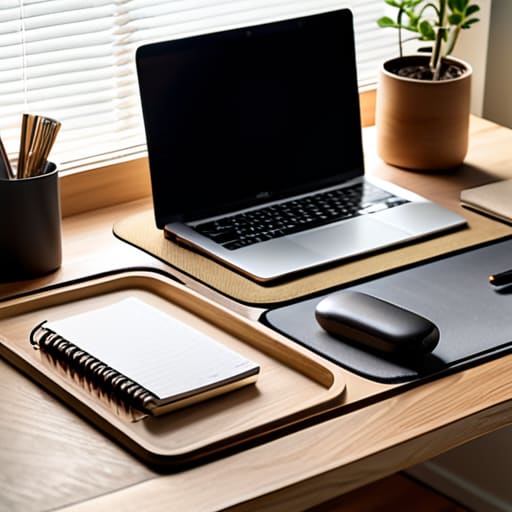
Most people treat their desk like a catch-all tray for everything from coffee mugs to spare screwdrivers. That’s a mistake. I view my desk in terms of “zones”—a primary zone for my computer and keyboard, and a secondary zone for things like my notebook or a lamp. If an object doesn’t have a specific functional home in one of these zones, it shouldn’t be on the desk at all.
Invest in Vertical Real Estate
When your desk gets crowded, the instinct is often to buy a bigger desk, but that’s just a temporary fix for a systemic problem. The real solution is to stop thinking horizontally and start looking upwards. Most home offices have a massive amount of wasted air space above the desk that could be doing some heavy lifting for you.
Curate Your Digital Desktop
We often obsess over the physical mess while completely ignoring the digital chaos staring us in the face. A desktop screen covered in hundreds of random icons and “Untitled” files is just as taxing on your mental clarity as a messy physical desk. It creates a sense of constant unfinished business every time you wake up your monitor.
Lighting as a Functional Tool
Lighting isn’t just about seeing what you’re doing; it’s about setting the operational tone for your brain. Relying solely on a single, harsh overhead light is a recipe for eye strain and midday fatigue. A poorly lit room feels claustrophobic, while a room with too much glare makes you want to close your eyes and walk away.
The End-of-Day Reset
The most important part of an organization system isn’t how you set it up, but how you maintain it. If you walk away from your desk at 5:00 PM leaving half-empty coffee mugs and scattered pens, you are essentially sabotaging your future self. You’re starting the next morning in a deficit, fighting an uphill battle against yesterday’s mess.
Getting Back to Work
At the end of the day, organizing your office isn’t about achieving some perfect, Pinterest-worthy aesthetic; it’s about building a system that actually works for you. Whether you’re implementing a strict cable management routine, clearing your desk of everything except the essentials, or finally tackling that mountain of paperwork, the goal remains the same: reducing the friction between you and your tasks. By applying these seven steps, you aren’t just tidying a room—you are actively reclaiming your focus and ensuring that your physical environment supports your mental clarity rather than draining it.
I know how easy it is to let the clutter pile up until your workspace feels more like a source of stress than a place of productivity. But remember, you don’t have to fix everything in a single afternoon. Start small, pick one area that’s currently driving you crazy, and apply a bit of logic to it. Once you strip away the chaos, you’ll find that you have more energy for the work that actually matters and, more importantly, more mental space to actually enjoy your life once the laptop finally closes. Now, go clear that desk and get to it.