I remember sitting in my tiny studio apartment after a grueling ten-hour shift, staring at a pile of random vegetables and a half-empty jar of spices, feeling completely defeated by a cookbook. I had all the ingredients, but I was paralyzed because I didn’t have a step-by-step manual telling me exactly when to turn the heat down or how many grams of salt to toss in. It’s a ridiculous way to live—letting a printed piece of paper dictate your evening when you have perfectly good senses at your disposal. Learning how to cook without a recipe isn’t about being a gourmet chef; it’s about breaking the dependency on instructions so you can actually use what’s in your fridge.
I’m not here to give you some flowery, culinary school lecture filled with unnecessary jargon. My goal is to give you a functional system—a way to look at ingredients and understand their roles so you can stop managing your kitchen and start actually enjoying it. I’ll show you the core principles of flavor, heat, and balance so you can build meals on the fly with confidence. No fluff, no expensive equipment, just straightforward logic for the busy person who wants to eat well without the mental clutter.
Table of Contents
- Mastering the Math Understanding Cooking Ratios for Instant Success
- The Art of Improvisational Culinary Skills to Reclaim Your Time
- Five Practical Rules for Cooking by Intuition
- The Bottom Line: Cooking by Instinct
- The Efficiency of Intuition
- Stop Overthinking and Start Eating
- Frequently Asked Questions
Mastering the Math Understanding Cooking Ratios for Instant Success
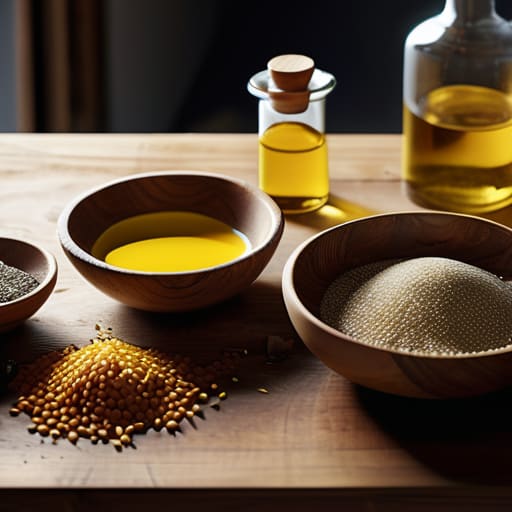
Think of cooking like systems engineering: once you understand the underlying architecture, you don’t need a manual for every single component. Instead of memorizing a thousand different instructions, start understanding cooking ratios. Whether it’s the 3:1 ratio for a standard rice dish or the fundamental relationship between a protein and its aromatics, these proportions act as your framework. When you grasp the math, you stop being a slave to a cookbook and start acting like a designer of flavor.
The real magic happens when you apply these frameworks to pantry staple cooking. If you have a base of grains, a fat, and an acid, you have a meal. The goal isn’t to follow a rigid formula, but to master the art of balancing acid, fat, and salt. If a sauce feels heavy or dull, don’t reach for more salt first; reach for a squeeze of lemon or a splash of vinegar. It’s about adjusting the variables in real-time to reach equilibrium. Once you internalize these ratios, the kitchen stops being a place of guesswork and becomes a space of controlled, delicious experimentation.
The Art of Improvisational Culinary Skills to Reclaim Your Time
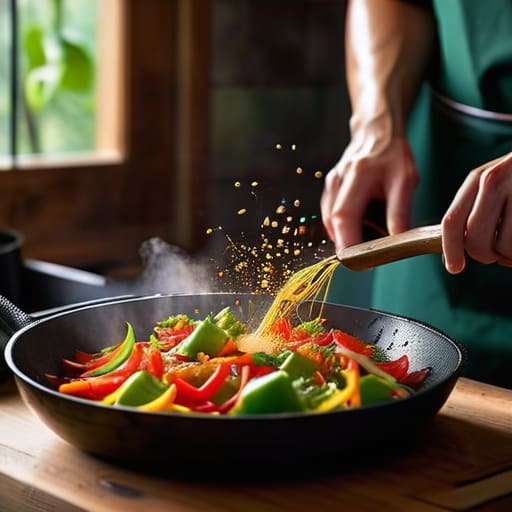
Once you’ve got the math down, you have to let go of the safety net. Improvisation isn’t about being a chaotic chef; it’s about applying improvisational culinary skills to the ingredients you actually have on hand. I used to spend twenty minutes scrolling through food blogs just to find a recipe for a simple chicken stir-fry, only to realize I was missing one obscure spice. Now, I just look at what’s in my fridge and start building. It’s about recognizing patterns rather than following scripts.
The real secret to this freedom is mastering the art of balancing acid, fat, and salt. If a dish feels heavy or dull, don’t reach for more salt—reach for a squeeze of lemon or a splash of vinegar. If it’s too sharp, a bit of olive oil or butter will smooth it out. This isn’t guesswork; it’s a system. Once you understand how these elements interact, you stop being a slave to the instruction manual and start actually cooking based on what your palate is telling you in real-time.
Five Practical Rules for Cooking by Intuition
- Build a “flavor profile” mental map. Instead of looking for a recipe, think in terms of balance: if a dish tastes flat, add acid (lemon or vinegar); if it’s too heavy, add heat or brightness; if it’s too sharp, add fat or salt.
- Focus on the foundation, not the garnish. Master the base—the aromatics like onions, garlic, and ginger—and you’ll find that the rest of the ingredients practically organize themselves around that core.
- Use your senses as your primary diagnostic tools. Stop checking the clock and start smelling the pan, feeling the resistance of the protein, and tasting at every single stage to see how the flavors are evolving.
- Keep a “pantry of essentials” ready to go. You don’t need a massive grocery list; you just need a reliable system of high-quality staples like good olive oil, dried spices, and acids so you can pivot mid-cook without a trip to the store.
- Embrace the “good enough” principle. Perfectionism is the enemy of efficiency; if the dish is balanced and tastes good, stop tweaking it and get it on the table so you can actually sit down and eat.
The Bottom Line: Cooking by Instinct
Stop treating your kitchen like a laboratory; once you understand basic ratios, you can ditch the cookbook and start trusting your senses to lead the way.
View every meal as a system of components rather than a rigid set of steps, allowing you to swap ingredients based on what’s actually in your fridge.
Use cooking as a way to reclaim your evening—efficiency comes from intuition and preparation, not from squinting at fine print on a recipe card.
The Efficiency of Intuition
Stop treating your kitchen like a laboratory where every milligram must be accounted for; once you understand the underlying logic of flavor and ratios, you stop managing ingredients and start actually creating meals.
Liam Anders Chen
Stop Overthinking and Start Eating
At the end of the day, cooking without a recipe isn’t about being a professional chef; it’s about applying a little bit of logic to the chaos of your kitchen. By mastering basic ratios and trusting your own senses, you strip away the friction that makes cooking feel like a second job. You don’t need a 12-step guide to make a decent meal when you understand how acid balances fat or how a pinch of salt transforms a bland sauce. Once you stop viewing ingredients as rigid instructions and start seeing them as modular components, the entire process becomes systematized and efficient.
I know how easy it is to get stuck in the loop of searching for the “perfect” recipe online, but that’s just more mental clutter you don’t need. My goal has always been to reclaim time, and nothing gives you back more minutes in your evening than the ability to look at a half-empty pantry and know exactly what to do with it. Don’t wait for the perfect conditions or the complete grocery list to start experimenting. Just grab your tools, trust your instincts, and start cooking. You’ll find that the most rewarding meals aren’t the ones that follow the rules, but the ones that actually taste like you made them.
Frequently Asked Questions
What do I do if I realize halfway through that I’ve completely missed a key ingredient or messed up a ratio?
Don’t panic. This is where your systems mindset kicks in. If you’ve missed a key ingredient, pivot immediately: find a functional substitute or change the dish’s direction entirely. If a ratio is off—say, too much acid—counteract it with fat or sweetness to rebalance the profile. Treat it like a mechanical failure; you don’t scrap the whole machine, you just adjust the components until the system stabilizes. Keep moving. Precision is great, but adaptability is better.
How do I know if a dish is actually "done" if I'm not following specific timing instructions from a book?
Forget the timer; it’s a blunt instrument that doesn’t account for variables like pan heat or meat thickness. Instead, rely on your senses. Use your thermometer for proteins—it’s the only way to be certain. For everything else, use the “touch and sight” method. Is the vegetable tender when pierced, or does it still snap? Is the sauce coating the back of a spoon? If it looks right and feels right, it usually is.
Is there a way to practice this without wasting a ton of expensive groceries on failed experiments?
Look, I get it. Throwing away a $30 ribeye because you overshot the seasoning feels like a failure of systems, not skill. Start with the “low-stakes” pantry items. Practice your ratios with eggs, rice, or whatever wilted vegetables are sitting in the crisper drawer. These are your training wheels. Once you stop fearing the mistakes on a bag of lentils, you’ll have the muscle memory to handle the expensive stuff without the anxiety.